Who We Are
Our Approach to Addiction
We see addiction as a health issue. Like any health issue, it responds to understanding, support and care — not to silence or blame. When someone is struggling, the question that helps is what do they need, not what did they do wrong. This is the starting point for everything we make.
We know this runs against how addiction is often understood in our communities, where it can be treated as a matter of honour (izzat), shame (sharam) or weakness. We don't judge anyone for seeing it that way; those ideas run deep and come from somewhere. But we have seen what they cost. Shame keeps people quiet, and quiet delays help. Naming addiction as a health issue is not about excusing anyone. It is about getting people to support sooner.
Addiction is rarely carried by one person alone. It reaches across a whole family — parents, siblings, spouses, children. In our work we keep meeting the people holding everything together, often women, often exhausted, often with nowhere to turn themselves. Their wellbeing matters as much as the person they care for. We make resources for them too, because supporting a family is part of supporting recovery.
We believe lived experience is evidence. The story of someone who has been through addiction tells us things no dataset can. We know this because it is our story too — we have lived with addiction and cared for those we love through it, and we do not shy away from sharing that. We honour these stories, learn from them, and let them shape our work — not as decoration, but as a real source of knowledge alongside the clinical picture.
And we believe recovery has to fit the life it belongs to. Faith, family, language and culture are not obstacles to work around; for many people they are the very things that make recovery possible. Support that ignores them often fails. So we build resources that speak to people in their own words, drawing on the traditions, values and strengths already present in our communities.
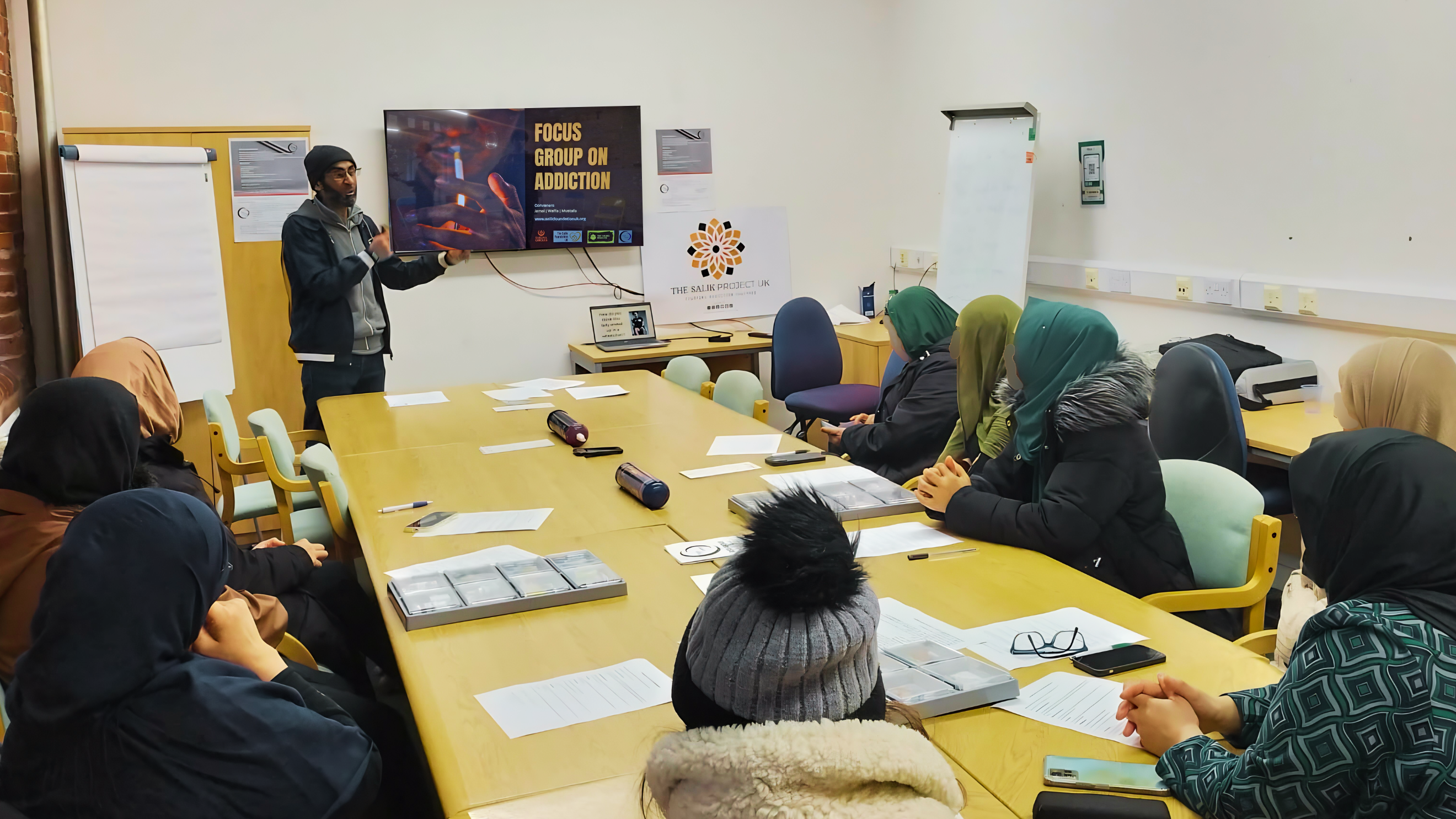
We also believe awareness and education have to reach deep into communities, where the need is greatest and the silence is loudest. That is why we go to people directly — through listening focus groups and outreach stalls — rather than waiting for them to come to us. Meeting people where they are is how the conversation begins.
We are not a treatment service, and we never judge. What we offer is the bridge to help: we open up the conversation, provide clear and honest information, and signpost people and families to the professional recovery services that can support them. Our job is to make that first step feel possible — and to point the way.