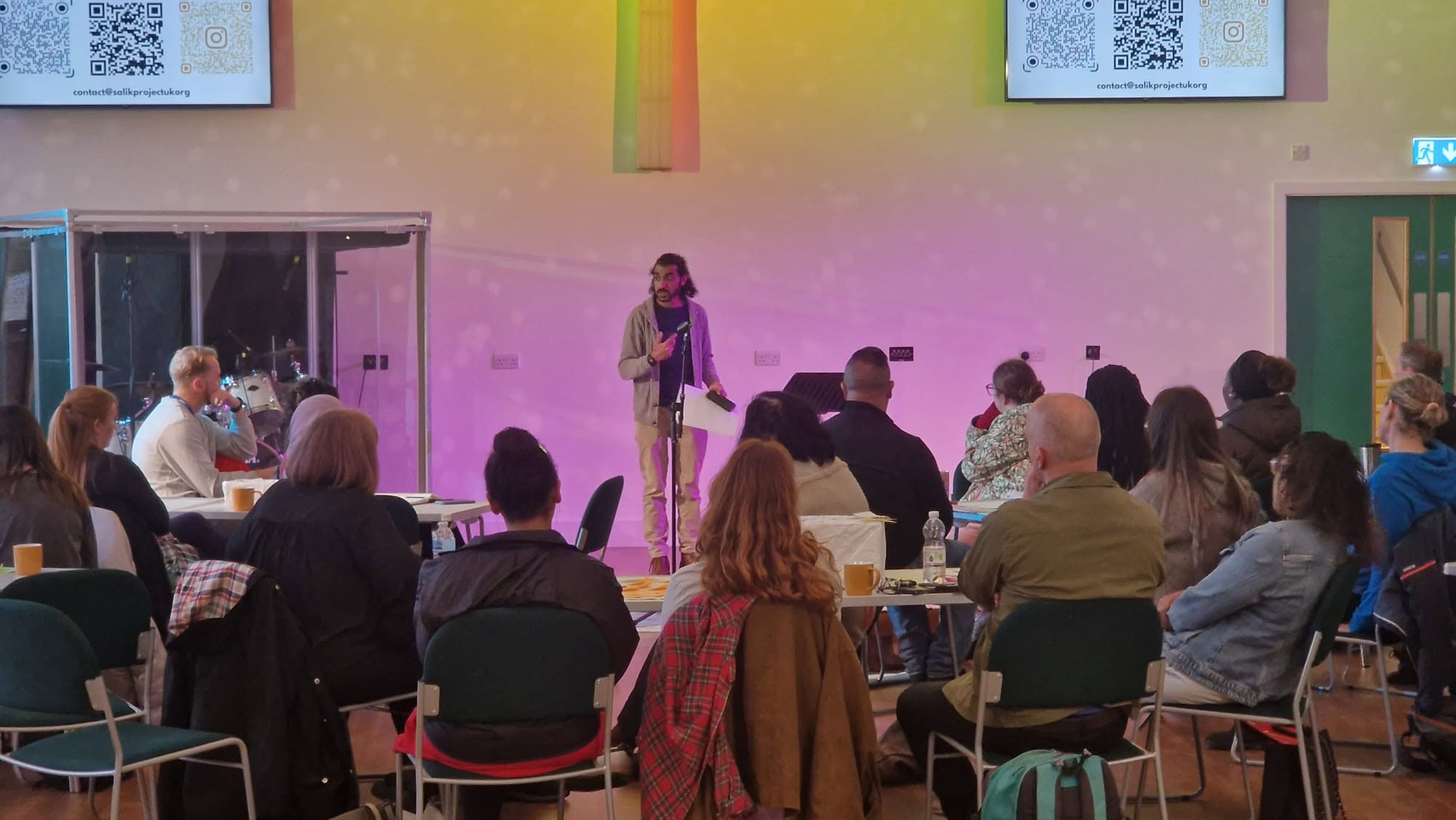
We were delighted to be invited to speak at the first Action Together Community Voices Network event on 20 May at Nelson Street Church.
During the event, Salik Project UK Project Coordinator Mustafa Hameed shared insights from the organisation's focus groups and community engagement work carried out over the past year. The presentation explored the challenges surrounding addiction within South Asian communities and examined how both communities and services can work together to improve access to support.
A central theme of the presentation was the impact of stigma and the role it plays in preventing individuals and families from seeking help. While addiction carries stigma across society, discussions highlighted how concerns around family reputation, honour, shame, and community perceptions can create additional barriers within some South Asian communities.
Mustafa emphasised that reducing stigma is a necessary step towards improving engagement with support services and ensuring that people feel able to access help when they need it.
"If there is no door for people to walk through, then don't expect anyone to turn up."
The presentation explored the importance of ensuring that recovery and treatment services are accessible, visible, and responsive to the needs of diverse communities. Raising awareness within communities is important, but it must be matched by services that understand the cultural, social, and family contexts that individuals may be navigating.
The discussion also highlighted the challenges associated with understanding the true scale of substance use within minority communities. Limited data, underreporting, and low levels of engagement with services can create an incomplete picture of need. Participants were encouraged to consider that low visibility should not automatically be interpreted as low prevalence.
Insights gathered through Salik Project UK's community engagement work suggest that many individuals and families face additional barriers when accessing support. These can include concerns about confidentiality, cultural misunderstandings, language barriers, fear of judgement, and a lack of awareness of available services.
The Hidden Impact on Families
A significant focus of the presentation was the impact of addiction on families. Mustafa highlighted that addiction is often viewed primarily through the experiences of the individual using substances. However, families frequently carry a substantial emotional, practical, and financial burden that can go unnoticed and unsupported.
Across Salik Project UK's focus groups, participants described how family members often become informal carers, advocates, crisis managers, and sources of emotional support. Many spend years trying to protect loved ones, manage difficult situations, and navigate services while experiencing stress, anxiety, isolation, and declining wellbeing themselves.
Particular attention was given to the experiences of women within families. Mothers, sisters, wives, and daughters were repeatedly identified as carrying significant responsibility, often supporting relatives in silence due to fears of judgement or damage to family reputation.
The presentation argued that support systems should recognise that addiction affects entire family networks, not just the individual experiencing substance use problems. Families often represent the first pillar of support for someone struggling with addiction, while the wider community forms a second layer of support and encouragement. Strengthening these support networks can play an important role in improving recovery outcomes and reducing harm.
Moving Beyond Awareness
The presentation also explored the importance of moving beyond simply acknowledging that addiction is a difficult topic to discuss. While previous studies have consistently highlighted stigma within South Asian communities, there remains a need for practical action that translates awareness into engagement.
Participants discussed the importance of outreach work, community education, and creating opportunities for honest conversations about addiction, recovery, and available support. This includes helping communities develop a better understanding of addiction, recognising signs of harm, and knowing where to seek help. Equally important is supporting professionals and services to understand the cultural factors that may influence help-seeking behaviour and engagement with treatment.
National Evidence Supports Community Findings
The presentation referenced the recent Advisory Council on the Misuse of Drugs (ACMD) review into drug use among ethnic minority groups. The report identified several challenges affecting engagement with treatment and recovery services, including:
- Limited cultural sensitivity within some services
- Low awareness of available support
- Insufficient outreach into ethnic minority communities
- Mistrust linked to experiences of discrimination and exclusion
- Workforce representation and competency gaps
- The impact of stigma and shame on help-seeking behaviour
The ACMD report also made several recommendations to improve engagement and outcomes, including:
- Increasing access to specialist services and specialist workers
- Strengthening cultural competence across the workforce
- Expanding outreach and community engagement
- Improving workforce representation
- Developing more community-based and culturally responsive approaches to support
These findings closely reflect many of the themes emerging from Salik Project UK's own community engagement work and reinforce the need for continued collaboration between communities, public health organisations, recovery services, and policymakers.
Looking Ahead
The event provided an important opportunity to share community voices and contribute to wider conversations about health inequalities, addiction, recovery, and community wellbeing. The discussion highlighted that addressing addiction requires action on multiple levels. Communities need opportunities to have open conversations about addiction and recovery, while services must ensure they are accessible, culturally informed, and responsive to the needs of the populations they serve.
Salik Project UK remains committed to working alongside communities, families, professionals, and partners to reduce stigma, improve understanding of addiction, and help ensure that both individuals and the families who support them can access the help they need. Recovery is rarely achieved in isolation, and strengthening support for families is an essential part of building healthier, safer, and more resilient communities.

